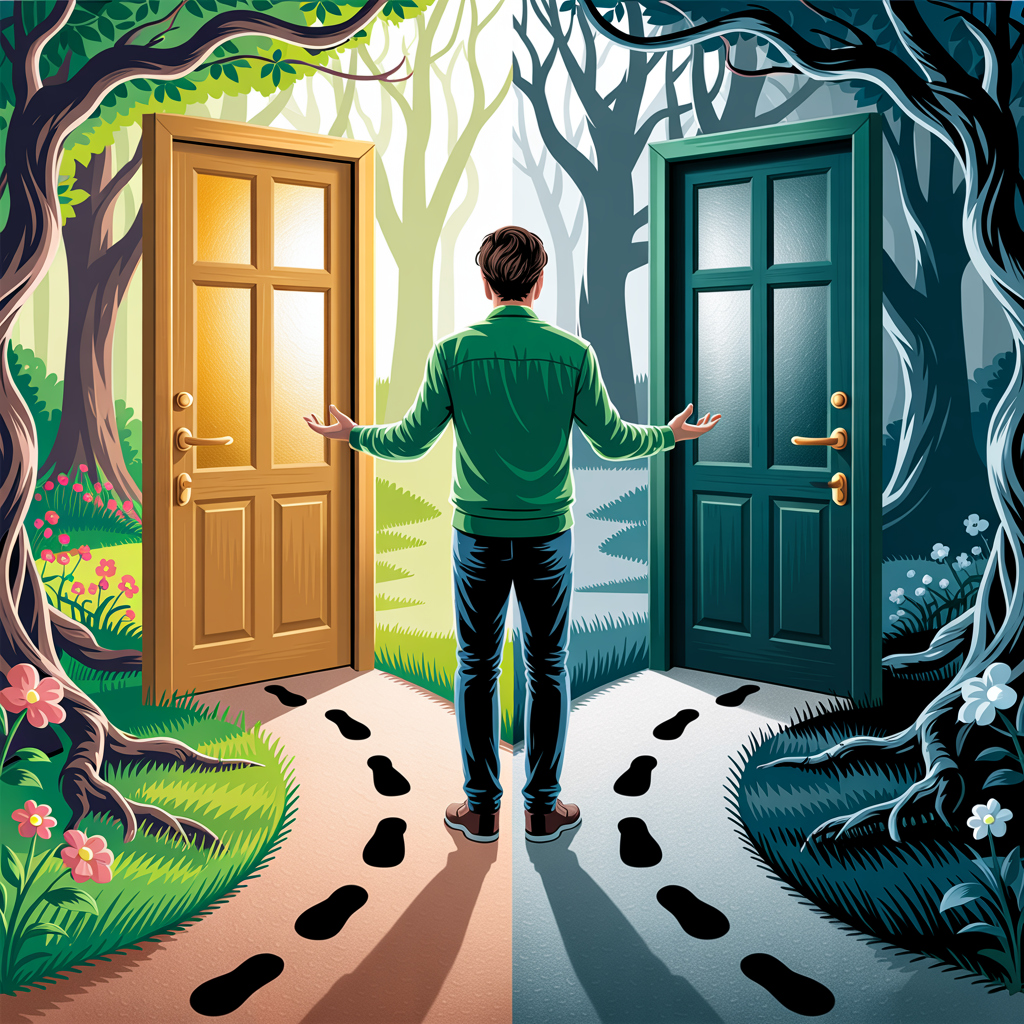
The events in the world feel as though they are spiraling. Each day brings something new to contemplate, debate, and wrestle with. The constant influx of tragedy and anxiety creates a kind of mental saturation that breeds chaos, confusion, and, eventually, apathy.
When harmful events become normalized, people begin to feel powerless. Over time, that perceived lack of power dulls the senses. It becomes easy to forget that choice still exists. It becomes easy to forget that we have agency.
This is not about what we choose to watch or listen to. That is a separate conversation. This is about understanding the principle of choice itself, regardless of context.
What “Consequence” Really Means
My father used to tell me something that felt heavy at the time. He would say,
“Everything has a consequence.”
As a child, I resisted that idea. I associated a consequence with something negative. I could not accept that good decisions could lead to anything but good outcomes. It did not make sense to me that a positive choice could still carry an undesirable result. What I did not yet understand was that consequence is not inherently negative. It simply means that something follows.
My father clarified this often. He was not speaking about punishment or failure. He meant that every choice, no matter how well-intentioned, sets something into motion. We are free to choose our actions, but we are not in control of what follows.
That realization continues to land with weight.
The Illusion of Equal Outcomes
There is a common belief that good choices guarantee good outcomes. If the intention is right, the result will be too. But life does not operate on a system of equal exchange. A thoughtful decision can still lead to an unfavorable result. A reckless one can, at times, appear to succeed. What good decision-making does is improve the probability. It does not ensure an outcome.
Leaning into probability rather than certainty is where clarity lives. Believing that outcomes will always match intentions creates disillusionment. That is not how the world works. What offers us the greatest protection is wisdom. It is the ability to think critically, to assess potential outcomes, and to recognize our own blind spots. Sometimes that means involving others in the decision-making process.
A Choice and Its Outcome Are Not the Same
Consider two people traveling toward a distant destination. Halfway there, they face a decision. They can continue walking or choose to hitchhike.
Neither option is inherently good or bad. Both carry potential risks and rewards. Since the future is unknown, neither choice guarantees a specific outcome.
In a real-life scenario, if they chose to hitchhike and encountered harm, the decision would be judged as poor in hindsight. If they hitchhike and arrive safely, the same decision might be considered sound. This underscores the talking point “I did the same, and nothing happened to me.”
The judgment shifts based on the result.
This raises an important question. Was the choice truly bad, or did it simply lead to an unfortunate outcome?
We often ignore that many risks exist regardless of the quality of the choice. A stranger is not the only potential danger. Most people we interact with daily begin as strangers. The distinction is not as clear as we pretend it is.
Where Our Responsibility Lies
There is often little effort made to prepare for the realities of the world as it is. What we can do is equip ourselves with information, apply critical thinking, and act with discernment. Responsibility does not end once a choice is made. It extends to accepting whatever follows.
There is a tendency, especially in chaotic and perilous times, to rely heavily on hindsight, assuming the outcome could have been different if a different choice had been made. Blame becomes easy. Accountability becomes scarce. To say, “I understood what could happen, and I accept the result,” reflects courage. It reflects maturity. It reflects a grounded understanding of agency and the world that we inhabit.
The Gap Between Choice and Accountability
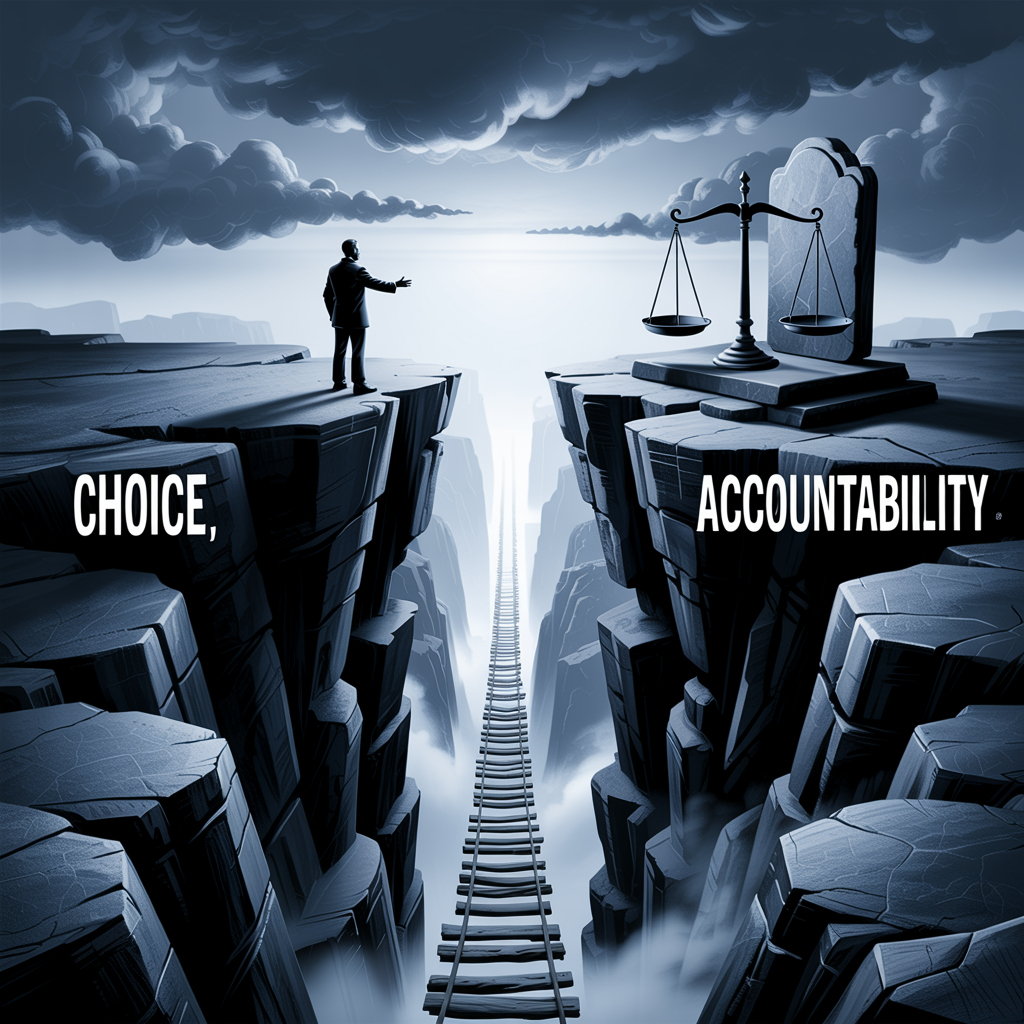
Something is missing in how we approach decision-making. Too often, we mourn outcomes that stem from choices that were not carefully considered. Decisions made without critical thought, shaped by emotion, or built on unrealistic expectations lead to consequences that feel shocking but are not entirely unpredictable.
What cannot happen is the displacement of responsibility. We cannot assign blame elsewhere for the consequences of our own choices. What can be said, honestly, is that we made the best decision we could with the information available at the time. Then we accept what follows.
There are, of course, inherently unsound decisions. In those cases, a positive outcome is the exception, not the rule. However, those outliers cannot redefine the broader principle.
When I really think about it, I know that if something carries real risk, and the odds lean more toward harm than anything good, choosing it means I am also choosing whatever might follow. That is not always easy to sit with, but it does mean that even when the outcome is painful, I cannot say it was entirely outside the realm of what I understood could happen.
That is the uncomfortable space where accountability lives.
Reclaiming the Meaning of Choice

Freedom of choice does not guarantee control over outcomes. Understanding that distinction is essential.
When people begin to recognize that choosing freely does not mean choosing consequence-free, there is an opportunity for change. There is a chance to prevent some of the harm that continues to unsettle and haunt us.
Teaching that every choice carries consequences is imperative. From there, we must emphasize the importance of making informed, conscious decisions with a clear awareness of possible outcomes. And just as importantly, we must be willing to accept whatever follows.

