
How we respond to life is everything—and yet, response is often the hardest thing to govern.
By virtue of being human, we emote. We react to our environment largely through conditioning. We are taught, consciously and unconsciously, how to respond to what we see, hear, feel, taste, and touch. When those responses become ingrained—played on repeat until they no longer require conscious thought—they enter a state of automaticity. The script runs on its own. In many situations, the only true agency we retain is not over what happens to us, but over how we respond to it.
A Mother’s Reflection
As the mother of a young boy, I witness this process in real time. I see how the world presses against him, how easily feelings arise when things seem unfair or when desires go unmet. At times, the world feels less welcoming to him—and that, too, is normal. Our bodies register perceived pain through emotion, often sadness, though pain itself is subjective and deeply personal. Any stimulus that triggers that feeling elicits a response. For him, that response may show up as anger or tears, and at his age, that is entirely expected. He has not yet learned how to regulate those emotions or to recognize that there is a more constructive way to express them. That understanding must be taught.
Withstanding Emotional Weather
There have been moments when I’ve interrupted him in the midst of his emotional storm—not to suppress his feelings, but to help him navigate them. I tell him it is okay to feel angry, but not to express that anger in ways that harm himself or others. It is okay to cry, but not to allow those tears to pull him into a sorrow he cannot emerge from. I want him to understand that while we may not choose our feelings, we do choose how we respond to them.
Caught in My Own Downpour

What humbles me is that while I stand in a position of guidance, charged with helping him learn how to face life’s challenges, I am still learning myself. Even at my age, I sometimes struggle with responsiveness. I react when I should pause. I allow emotion to surge where reason should stand firm. And that, too, is part of the journey. Growth does not eliminate obstacles; it simply sharpens our ability to recognize them as they appear.
While reading a particularly poignant book entitled “Built to Lead: Forged by Purpose, Fueled by Faith,” one passage settled deeply within me:
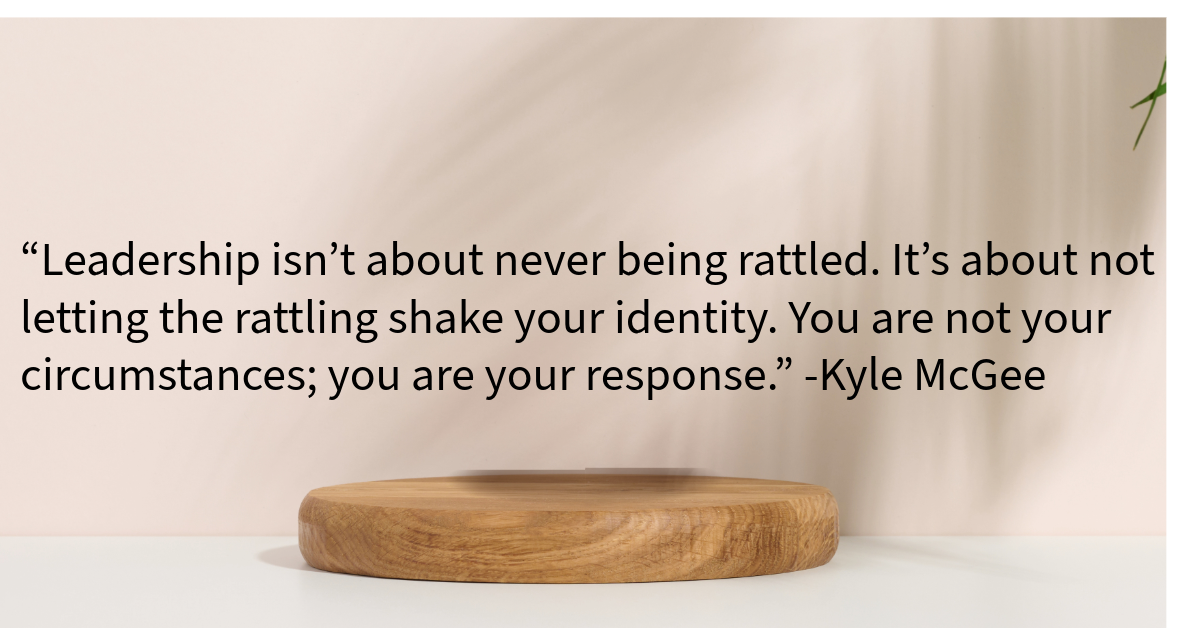
That truth resonated profoundly.
Your Response is Your Signature
For anyone striving to become a better version of themselves, for anyone who looks at life and feels powerless—remember this: there will always be one thing within your control. Your response. Let that response reflect who you are, or, if you are still becoming, who you aspire to be.
 Inspiraelevation